

















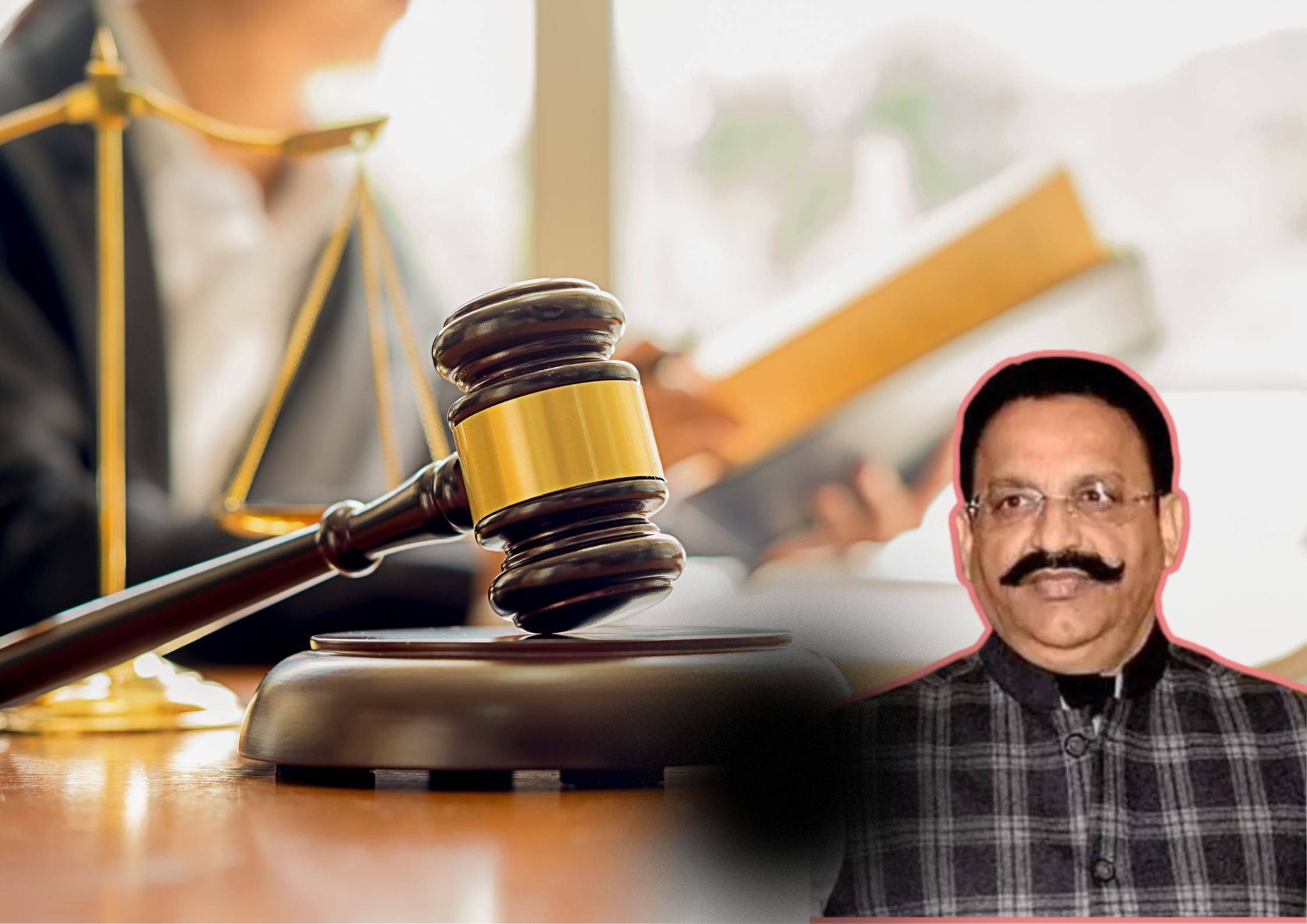
W.P. (Crl.) No. 629/2023
On April 30, 2025, the Supreme Court of India disposed of a writ petition filed in 2023 by Umar Ansari, son of the late gangster-turned-politician Mukhtar Ansari, seeking the transfer of his father from a jail in Uttar Pradesh to a prison outside the state. The petition was based on concerns that Mukhtar Ansari faced threats to his life while in custody in UP.
The petition became moot after the death of Mukhtar Ansari in March 2024, reportedly due to cardiac arrest, while he was serving a life sentence in Banda jail, Uttar Pradesh. The Court was informed of the death, following which the matter was formally disposed of by a bench comprising Justices MM Sundresh and Rajesh Bindal.
Background of the Petition
Umar Ansari filed the writ under Article 32 of the Constitution, alleging that his father’s life was in grave danger due to a conspiracy involving members of the state establishment. He claimed the family had been targeted by the state and feared assassination attempts on Mukhtar Ansari while he was lodged in Banda jail.
This fear was not without precedent. The petition cited several high-profile custodial killings:
-
Shahnawaz, an undertrial, was killed in December 2019 during transit to court.
-
Atiq Ahmed and his brother Khalid Azim, both accused in criminal cases, were shot dead in April 2023 while in police custody during a medical check-up.
-
Meraj Ahmad, a co-accused in an MCOCA case along with Ansari, was killed inside Chitrakoot District Jail in May 2021.
Despite these incidents, the State of Uttar Pradesh assured the Court that adequate security measures were in place and that no harm would come to Mukhtar Ansari in custody.
Previously, in 2021, the Supreme Court had allowed the transfer of Mukhtar Ansari from a Punjab jail to a UP jail following a plea by the UP government.
Developments After Ansari’s Death
Mukhtar Ansari died on March 28, 2024, reportedly due to cardiac arrest. The State submitted a medical report and post-mortem findings, which attributed the death to natural causes.
However, in July 2024, Umar Ansari publicly alleged that his father had been poisoned in jail and that he was denied essential medical treatment, contributing to his death.
In January 2025, the Supreme Court had directed the UP authorities to provide Umar Ansari with copies of all medical and enquiry reports regarding the death. During the hearing on April 30, Advocate Nizam Pasha, appearing for Umar Ansari, argued that the petition should not be treated as infructuous merely because Mukhtar Ansari had died. He emphasized that the petition was originally filed out of a genuine apprehension for his father’s life, which was ultimately proven correct.
Justice Bindal responded that the official cause of death was heart attack, as stated in the post-mortem. Additional Solicitor General KM Nataraj, appearing for the state, confirmed that the required reports had been furnished to the petitioner.
Advocate Pasha, however, informed the Court that he had only received the voluminous 500+ page report a day earlier, and therefore sought time to review the material. He further added that a separate application has been filed seeking an inquiry into the cause of Mukhtar Ansari’s death.
Court’s Observations and Final Order
Justice Sundresh observed that the remedy for further investigation or inquiry lies with the High Court, and not the Supreme Court, especially since the original writ pertained solely to a request for transfer between jails. Justice Bindal reiterated that the Supreme Court had entertained the Article 32 petition only on the limited ground of jail transfer.
Accordingly, the writ petition was disposed of with liberty to the petitioner to seek appropriate remedies before the High Court, if so advised.