
























In a strong affirmation of the fundamental rights of citizens, the Supreme Court of India has observed that every person who visits a police station to report the commission of an offence is entitled to be treated with dignity, a right guaranteed under Article 21 of the Constitution.
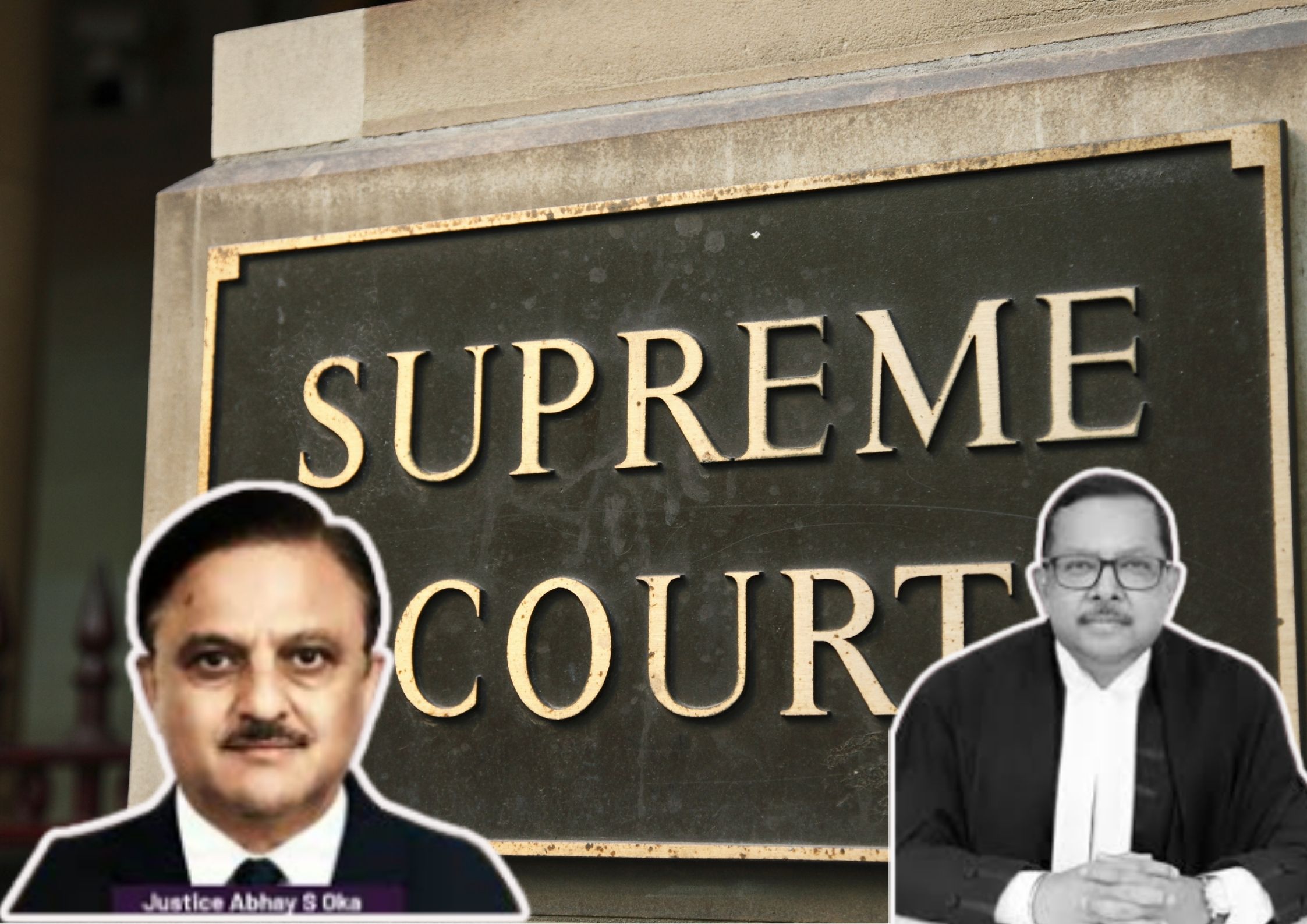
The observation came from a bench comprising Justice Abhay S. Oka and Justice Ujjal Bhuyan, which upheld an order passed by the Tamil Nadu State Human Rights Commission (SHRC) directing the state government to pay ₹2 lakh compensation to a complainant. The compensation is to be recovered from the police inspector who refused to register a First Information Report (FIR) and misbehaved with the complainant and his mother.
Background of the Case
The case arose from an incident at Srivilliputhur police station, where the complainant and his parents approached the police to lodge a complaint involving alleged cheating and embezzlement to the tune of ₹13 lakh. Upon submitting the complaint to the sub-inspector, they were informed that the matter involved multiple jurisdictions and could not proceed without approval from the police inspector, Pavul Yesu Dhasan, the petitioner in the case.
The sub-inspector provided the complainant with the inspector’s phone number. The complainant’s mother subsequently spoke with Inspector Dhasan over the phone. Later that evening, when the complainant visited the station again around 5:00 PM, he was asked to wait until the inspector arrived, which did not happen until 8:30 PM. Upon arrival, Inspector Dhasan refused to register the FIR and reportedly used offensive and abusive language while speaking to the complainant’s mother.
SHRC and High Court Findings
Following a complaint, the Tamil Nadu SHRC conducted an inquiry and found that Inspector Dhasan had not only refused to register the FIR but also used filthy and objectionable language, thereby violating the complainant’s human rights.
The SHRC ordered the Additional Chief Secretary, Home Department, to pay ₹2,00,000 in compensation to the complainant, with the liberty to recover the same from Inspector Dhasan. This order was upheld by the Madras High Court.
Supreme Court Proceedings and Verdict
Inspector Dhasan challenged both the SHRC and High Court orders before the Supreme Court. His counsel argued that even if the FIR was not registered, it did not amount to a violation of human rights.
Rejecting this contention, the Supreme Court held that the facts of the case were “shocking.” It noted that the respondent simply sought registration of a complaint, and the law clearly mandates police to register an FIR in such cases. The Court emphasized that the inspector, as a senior officer, had a duty to uphold the law and facilitate the registration of the complaint, not obstruct it or mistreat the complainant.
The bench remarked:
“Very objectionable language was used by the petitioner to talk to the respondent’s mother, which is noted in paragraph four of the impugned judgment of the State Human Rights Commission.”
Referring to Section 2(1)(d) of the Protection of Human Rights Act, the Court reiterated that human rights include rights relating to life, liberty, equality, and dignity as guaranteed by the Constitution and enforceable by courts.
Finding no legal infirmity in the orders of the SHRC and the High Court, the Supreme Court dismissed the plea.
“Looking into the conduct of the petitioner, it was rightly found by the Commission and by the High Court that there was a violation of human rights. Therefore, no interference is called for. Petition is dismissed,” the Court concluded.
Case Title: Pavul Yesu Dhasan vs. The Registrar, State Human Rights Commission of Tamil Nadu
SLP (C) No. 20028/2022 | Diary No. 33406/2022