



















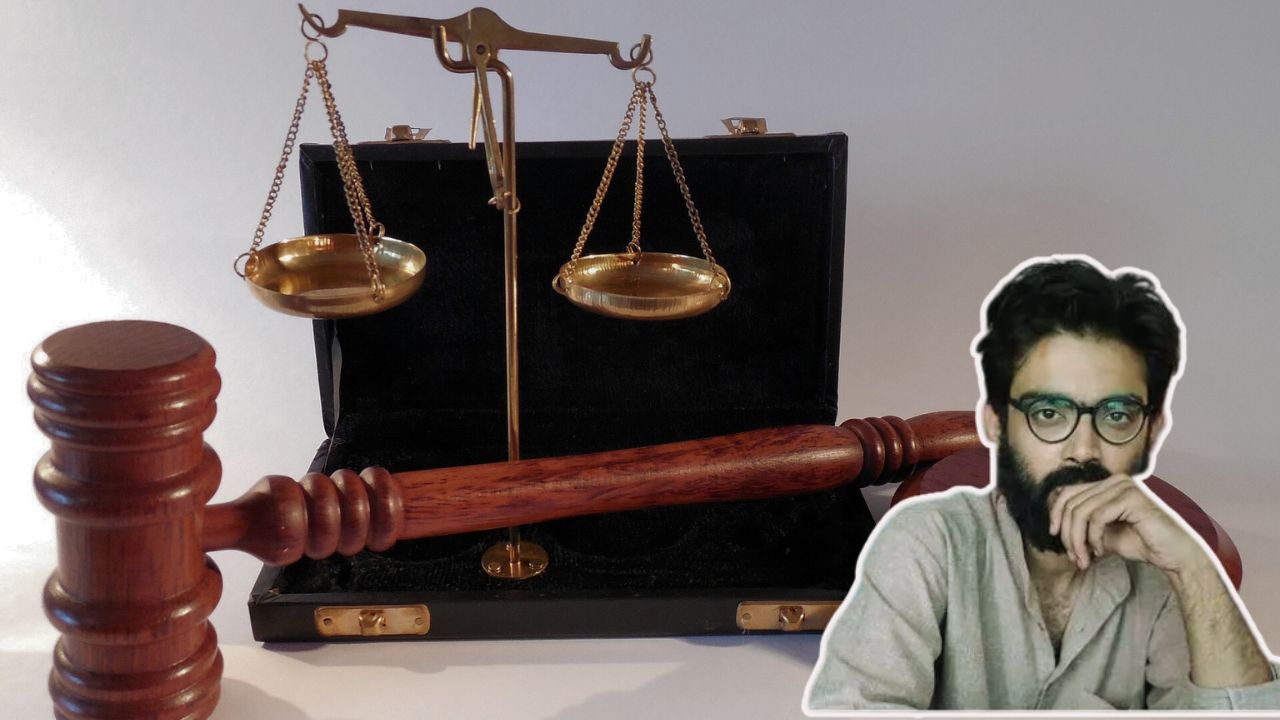
On April 29, the Supreme Court of India considered the plea of former JNU student Sharjeel Imam, who requested that multiple FIRs filed against him across various states be clubbed into a single case. The core issue before the bench—comprising Chief Justice of India Sanjiv Khanna and Justice Sanjay Kumar—was whether multiple FIRs can legally arise from a single speech that was published online.
Imam, currently facing prosecution under charges of sedition and the Unlawful Activities (Prevention) Act (UAPA), has had FIRs lodged against him in Uttar Pradesh, Assam, Manipur, and Arunachal Pradesh. His petition seeks to consolidate these cases and have the trial conducted in Delhi, where he was initially arrested in January 2020 for speeches made at Jamia Millia Islamia University and Aligarh Muslim University.
During the hearing, CJI Khanna questioned the constitutional validity of prosecuting Imam in multiple states based on the same speech, raising concerns about potential double jeopardy. “Since the FIRs are arising out of one speech, would it not amount to double jeopardy if Imam gets convicted in trials occurring in multiple states?” the CJI asked.
However, Additional Solicitor General (ASG) S.V. Raju, appearing for the State of Delhi, argued that different instances of incitement in different states constituted separate offences. “Instigating a mob in Bihar, instigating a mob in UP, instigating a mob in Delhi—these are different offences,” he contended.
The Chief Justice countered, “The speech is one, it’s not separate, so there will be one offence.” He emphasized that Raju’s argument might stand if Imam had delivered multiple speeches, but that is not the case here. “If there was a different speech, you may be right. Here the speech is the same,” the CJI noted.
ASG Raju further argued that the effect of the speech in different regions should be considered. “If different persons are instigated separately, the offence against the state may be one, but the offences against society would differ.”
The CJI responded that since the speech was recorded and published online, it could be accessed by anyone across the country. However, he maintained that the root offence remains singular, despite its potential widespread impact. “The speech was recorded, so it can be heard across India, but the offence is one. The impact thereof may be different, but otherwise it will be difficult,” he said.
ASG Raju clarified that the issue of double jeopardy would only become relevant in the event of multiple convictions. He also stated that he was not representing the other states involved in the case.
Chief Justice Khanna proposed that trials in other states could be stayed until the Delhi trial concludes. “Mr. Raju, if you permit, we can stay the trial in other states till the Delhi trial is complete,” he suggested.
Senior Advocate Sidharth Dave, representing Imam, informed the court that his client was being summoned to appear in various state courts, even as the Delhi trial proceeds. “Now they are asking me to come to Assam, UP, Manipur—I cannot be dragged across the country for one speech I gave,” Dave argued.
He raised the concern that if every state could file a separate FIR for the same speech, a person could be subjected to endless prosecutions. “Imagine, my lords—one speech, and there can be 500 prosecutions across India? So you would be prosecuted 500 times and undergo custody 500 times? And they will all be separate offences?” he questioned.
ASG Raju retorted, “Look at the kind of speeches he has given. He says separate Assam from India!” Dave, however, emphasized that even if Imam’s speech was controversial, legal procedure must still be followed. “I may have given the worst of speeches, but the rule of law must be followed. That is a right that Mr. Raju cannot take away,” he stated.
The ASG informed the bench that in the next hearing, he would present judicial precedents supporting the legality of treating such cases as multiple offences.
The bench has agreed to revisit the matter in two weeks.
Previously, in August 2024, the Supreme Court had sought responses from the four states in question on whether they opposed transferring the case to Delhi. It was informed that investigations in Assam and Manipur were complete, and that Imam was eligible for default bail in the Assam matter.
The Supreme Court is currently hearing Sharjeel Imam vs. Government of NCT of Delhi and Others (Diary No. 4730-2020). Imam has been in custody since January 28, 2020.